Sunshine Coast Flood Overlays Explained: What Buyers Need to Know Before They Offer
What Buyers Need to Know Before They Offer - t's the check most buyers skip. It's the one that matters most in some suburbs.
Oct 18, 2026
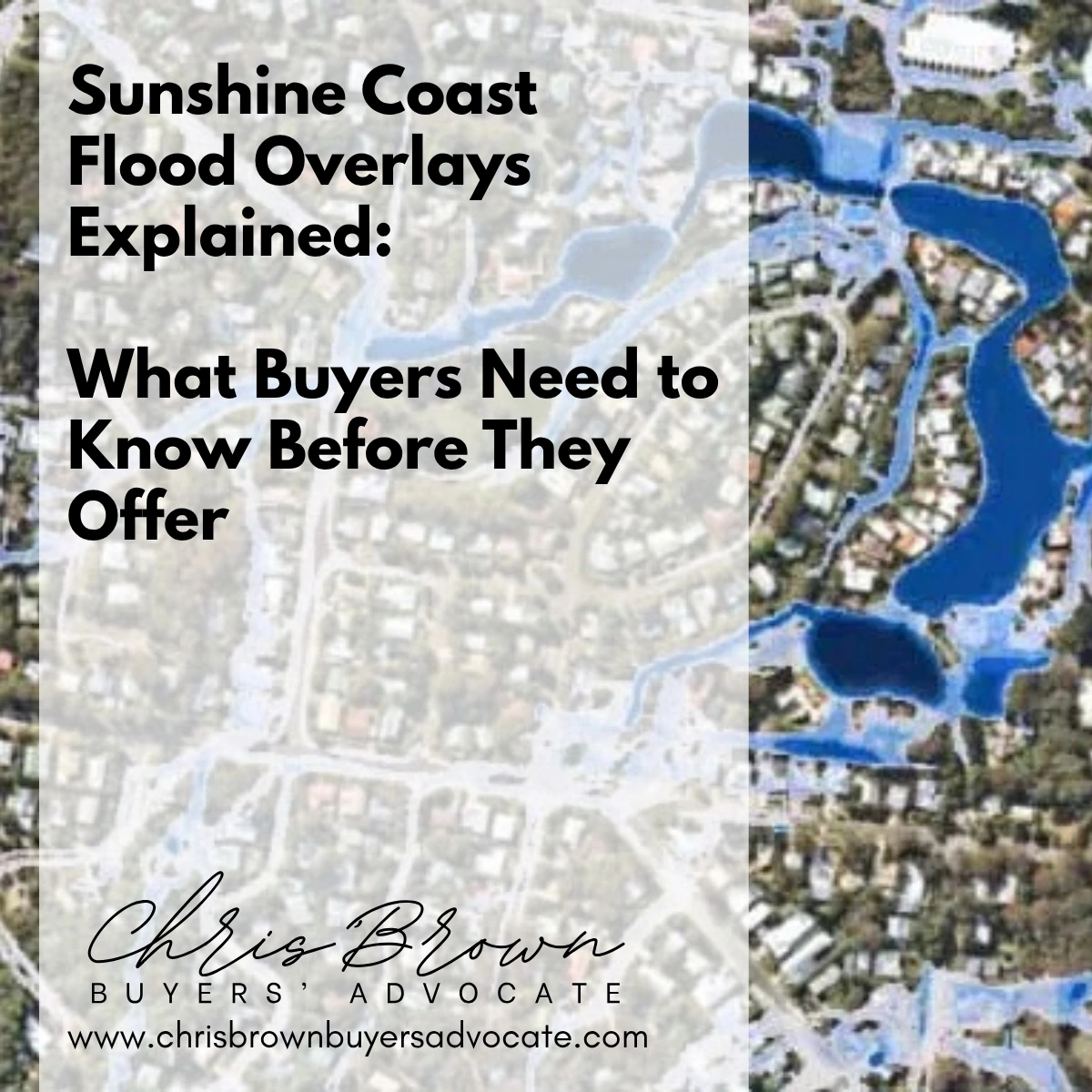
When buying property on the Sunshine Coast, it's easy to focus on the house, the street and the asking price. But there's another check that deserves your attention before you make an offer: Flood mapping.
Flood risk can affect how you use a property, future building or renovation plans, insurance costs and resale appeal. Sunshine Coast Council provides flood mapping to help buyers and property owners understand these risks.
Here's what you need to know before committing to a property.
What is a flood overlay?
A flood overlay is a mapping layer used to identify land that may be affected by flooding or related hazards. Depending on the map, this can include river flooding, storm tide, overland flow or drainage-related issues.
On the Sunshine Coast, flood risk is not limited to properties beside rivers or creeks. Heavy rainfall can cause water to flow across land, collect in low-lying areas or overwhelm local drainage systems.
A property appearing on a flood map doesn't automatically mean the house itself will flood. Equally, a property outside a mapped area is not guaranteed to be free from flood or stormwater risk.
Which Sunshine Coast areas should buyers check?
Buyers looking across Maroochydore, Bli Bli, Mountain Creek, Buderim, Nambour and other parts of the Coast should assess each property individually.
The important point is not to label an entire suburb as safe or risky. Flood exposure can vary between neighbouring streets and even between properties on the same street.
For example, a home on elevated land may have a different risk profile from a lower-lying property nearby. A sloping block may also have overland flow considerations that aren't obvious during a sunny open home.
Never rely on the suburb name or a quick visual inspection to determine flood risk.
Three checks to complete before making an offer
1. Check the property's flood mapping
Start with Sunshine Coast Council's flood mapping and information. Review the available land-use planning, stormwater and emergency preparedness information for the specific address.
2. Investigate insurance and property-specific risks
Obtain an insurance quote using the property's exact address and ask what flood cover is included. If the mapping raises concerns, seek further information about potential flood levels, drainage and overland flow. Council can provide more detailed property-specific flood information where appropriate.
3. Understand future building and renovation restrictions
If you're planning an extension, adding a secondary dwelling or undertaking substantial renovations, investigate the relevant planning and building requirements before you buy. Flood hazard mapping can affect building design, floor levels and development options.
Does a flood overlay mean you shouldn't buy?
Not necessarily. The aim is to understand the risk, its potential cost and whether the property still suits your needs.
Some buyers may accept a manageable level of risk if the property offers other advantages. Others may decide that insurance costs, restrictions or uncertainty make it unsuitable.
The key is to make that decision with reliable information, not assumptions.
Do your homework before you offer
When assessing Sunshine Coast property, I look beyond the asking price and the presentation. Understanding location-specific risks is an important part of determining whether a property represents the right opportunity.
A few checks before signing can help you avoid expensive surprises later.
Thinking about buying on the Sunshine Coast?
Check the flood mapping, understand the insurance implications and get the right advice before committing. The best property decision is an informed one.
*This article provides general information only. Flood mapping is a screening tool, not a substitute for property-specific technical advice. Consult Sunshine Coast Council and appropriately qualified professionals about any concerns relating to a particular property.